
November 2025
Vic Davis & Associates
2025 – NOVEMBER BENCH JEWELER “NEWSLETTER”
Funny “Did You Know?” Facts About November…..
1. Did you know November was originally the 9th month? The calendar got reorganized and November just went along with it, like the chill friend who doesn’t ask questions.
2. November’s birthstones are Topaz and Citrine, both warm-colored gems, because you’ll need emotional warmth when the sun disappears at 4:30 PM.
3. Veterans Day is on November 11 because the WWI armistice happened at the 11th hour of the 11th day of the 11th month — extremely satisfying if you like neat numbers.
4. No-Shave November: The one time of year you can stop shaving and call it charity instead of giving up on life.
5. The flower of November is the Chrysanthemum, which symbolizes loyalty. Appropriate, because your bed will want you to stay loyal and never leave.
6. November’s full moon is called the Beaver Moon, which absolutely sounds like a minor-league hockey team.
7. Daylight Saving Time ends in November, which is great because you get one extra hour of sleep, but terrible because the sun starts clocking out before you do.
8. The Leonid meteor shower happens in November — nature’s reminder that space doesn’t care about your holiday stress.
9. In Celtic lore, November is symbolized by the beaver. No one knows why, but we respect the vibes: prepare for winter, store snacks, avoid humans.
10. The first Thanksgiving feast lasted three days, proving that humans have always been capable of impressive overeating.
11. November is the month where pumpkin spice refuses to leave. It’s the holiday-season version of a roommate who moved out but keeps coming back for their blender.
12. Scorpio season in November means intense emotions. Sagittarius season means spontaneous chaos. Basically November is a rollercoaster with no seatbelts.
13. November was called “Blood Month” in Old English because livestock were prepared for winter. Now we just call it “Holiday Budgeting.”
Things to Ponder….
- Someone is sitting in the shade today because someone planted a tree a long time ago.
- Use an object to keep your hands occupied, such as a stress ball, tension toy or fidget spinner. This will allow your mind to focus better and maintain productivity.
- You define your own life. Don’t let other people write your script.
November’s Topic…. How Artificial Intelligence Might Change the Role of a Bench Jeweler
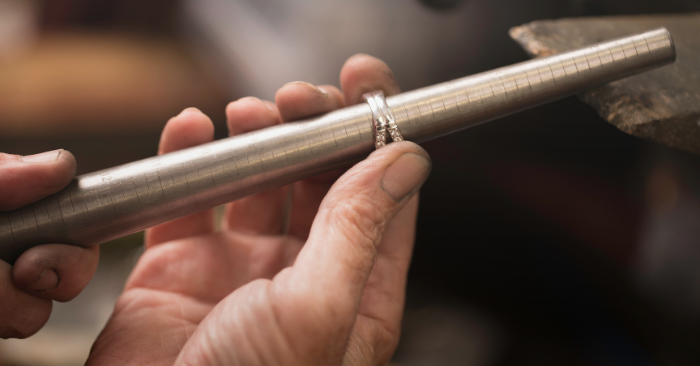
The bench jeweler has long been defined by hands-on craftsmanship: sawing, soldering, filing, stone setting, and polishing precious metals into wearable works of art. It’s a profession rooted in patience, tactile skill, and the quiet satisfaction of transforming raw material into something personal and enduring. However, with rapid advances in artificial intelligence (AI), computer-aided design (CAD), and automated manufacturing, the workbench of the future may look very different. Rather than replacing the bench jeweler, AI is likely to reshape the role—shifting the balance between traditional handwork and digital design.
Increasing Precision and Efficiency
One of the first places AI can enhance the jeweler’s workflow is accuracy. AI-driven design tools can analyze proportions, suggest structural improvements, and predict weak points in a piece before it’s ever produced. For example, a jeweler can upload a ring design and the software can automatically adjust prong thickness or recommend a more secure setting for a specific gemstone hardness. This can reduce resizing, repairs, and remakes—saving both time and material costs.
Similarly, laser welders, digital measuring tools, and AI-driven engraving machines are already beginning to replace some of the more repetitive or delicate manual tasks. This doesn’t eliminate the need for hand skills, but it changes where the jeweler’s time and effort are concentrated.
New Design Possibilities
AI-enabled design platforms open creative doors that are difficult to achieve by hand alone. Generative design tools can produce complex organic patterns, geometric structures, and lattice-like forms that would be nearly impossible to carve through traditional techniques. A jeweler could input a mood, motif, or intentionally vague inspiration—“Art Deco meets coral reef”—and receive dozens of design directions to refine and personalize.
Rather than reducing creativity, these tools can amplify it. The jeweler becomes a curator of ideas rather than starting from a blank sketch each time.
Customization at Scale
One of the most meaningful shifts AI enables is mass customization. Traditionally, fully custom jewelry is labor-intensive and expensive, limiting how often customers pursue it. With AI-driven modeling and automated manufacturing (such as 3D printing in wax or metal), jewelers can create custom designs more quickly and affordably.
This means customers may increasingly expect personalization—engraved patterns, stone layouts, or unique silhouettes tailored to lifestyle and taste. The bench jeweler’s role may evolve from fabricator to consultant, interpreter, and finisher: refining, assembling, setting stones, and adding the human touch that makes a piece feel personal rather than factory-made.
Preserving the Human Element
Even as AI expands into workshops and studios, there are fundamental aspects of jewelry that are deeply human. The subtle pressure of a graver, the instinctive feel of how a stone seats under tension, the emotional exchange that happens during a custom consultation—these are things algorithms cannot replicate.
The value of handmade jewelry may even increase in response to widespread automation. Much like handmade furniture or hand-thrown pottery, artisan-made jewelry could become more treasured precisely because it carries the maker’s individuality.
Moreover, AI tools still require guidance. The bench jeweler of the future will need to combine traditional craft knowledge with digital fluency—understanding not only how jewelry is physically constructed but also how to direct machines to work in harmony with the hand.
The Future Workbench
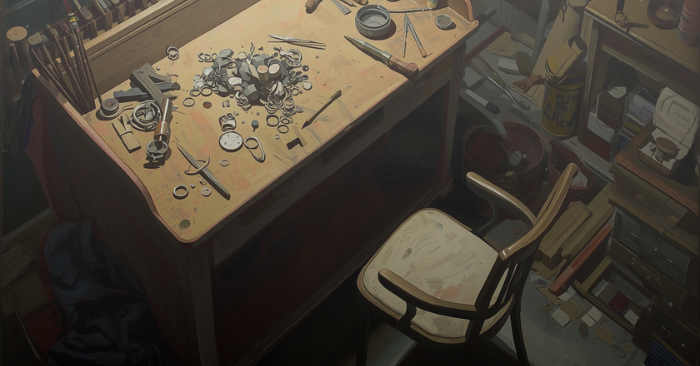
A future bench jeweler’s workstation may include:
· A high-resolution 3D scanner
· CAD software enhanced by generative AI
· A resin or metal 3D printer for prototypes
· Laser welding and engraving tools
· Traditional hand tools that remain essential to final construction and finishing
The craft will broaden rather than disappear.
Conclusion
AI is not replacing the bench jeweler—it’s redefining the role. The value of skilled hands, trained eyes, and artistic instinct remains irreplaceable. What changes is the workflow: less repetitive labor, more design interpretation; fewer manual calculations, more creative exploration. Jewelers who embrace these tools will likely find themselves able to create more intricate, personalized, and structurally sound work than ever before.
In the end, technology expands the possibilities of craftsmanship. The heart of the work remains the same: creating objects of beauty, meaning, and memory—one piece at a time.
Please visit our website, www.vicdavisjobs.com for current positions we are working
now. Jobs in AL, AZ, CO, LA, IL, ME, MI, MO, MS, NC, NE, NY, OH, OK, TN, UT, VA, and
WA, and they are ALL looking NOW to fill these positions! Don’t hesitate to contact us….we
love hearing from you!
We offer a generous referral fee if a friend of yours gets hired:
For any bench jewelry professional that you refer to our company and we
successfully place in a new position, upon receipt of our placement fee we will
send you an appreciation/reward check in the amount of $500.00.
This is our special “People Helping People” (PHP) referral program. People helping people, a good thing for all of us to remember to do.
Thanks, until next time…. Vic! Please stay safe and healthy!








Leave A Comment